+ 919810024178
 + 14168320727

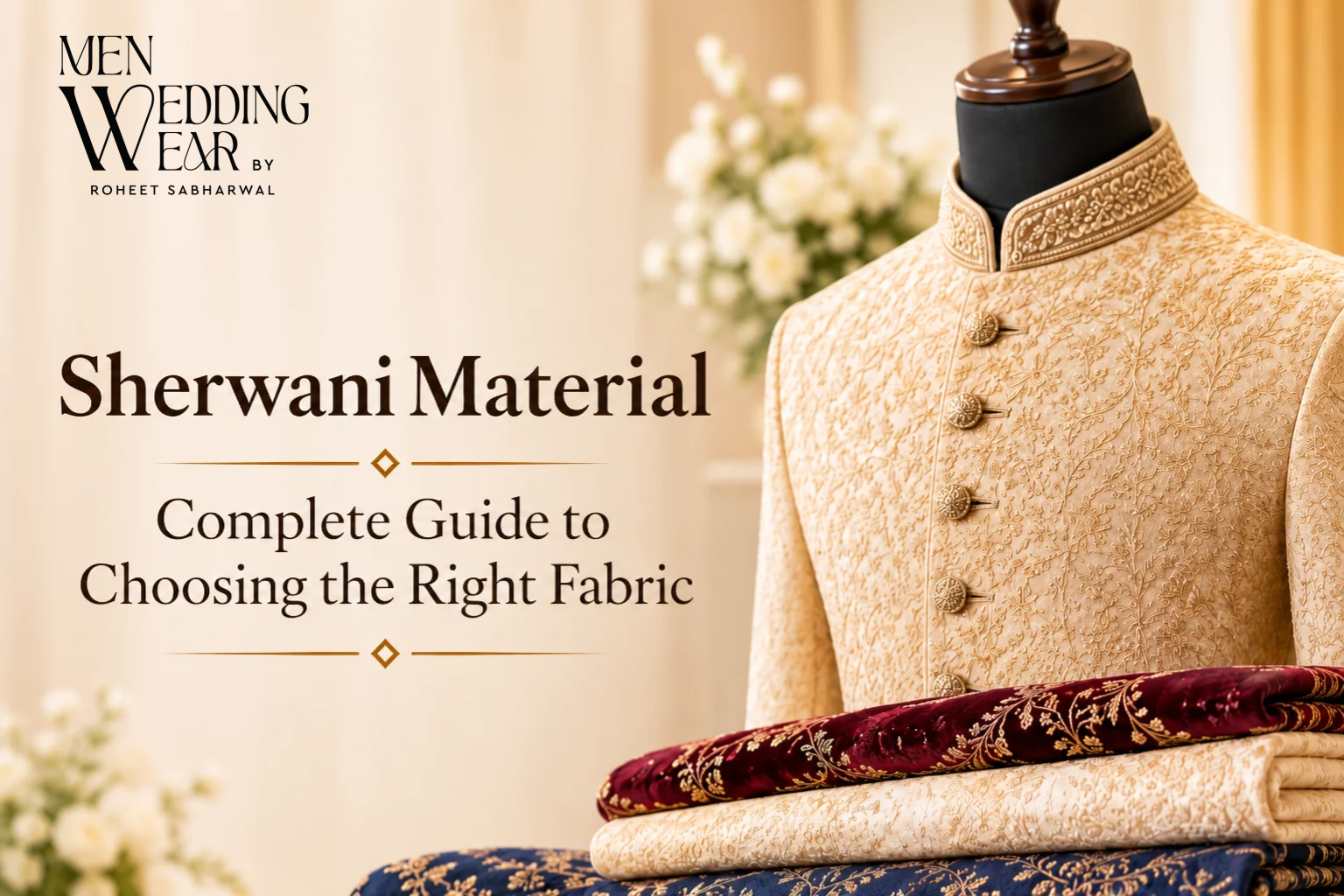
D-day has to be perfect, including the outfit and accessories you choose. While most people focus on the struggle of finding the right bridal lehenga, the groom’s sherwani takes just as much effort (sometimes even more). Imagine you like a design and the fit, but the fabric used for the sherwani isn’t your choice or feels somewhat off.
Each detail of the Sherwani should be proper and comfortable, and choosing the right fabric makes the real difference here.
So, let’s start with the basics and understand Sherwani material and choosing the right one for your D-day.
Why does the Sherwani Fabric Matter So Much?
If you are focusing only on the design and fit of your Sherwani, you are making a mistake here. No matter how great the outfit looks, it isn’t worth it if you are not comfortable wearing it for a longer duration. The fabric affects everything from the outfit’s drape and structure to its breathability and overall appearance. A good sherwani cloth should complement the design while allowing you to move comfortably.
For instance, a structured fabric creates a royal silhouette, while a softer material gives the outfit a more relaxed appearance. This is why choosing sherwani fabric deserves as much attention as selecting its colour or embroidery.
Top Choices: Men’s Sherwani Fabric for This Wedding Season
The wedding season is here, and the confusion of selecting the right Sherwani is getting real! To help you and make things easier for you, here are some of the best Sherwani materials worth exploring this wedding season.
1. Silk
Silk has a timeless charm that looks perfect in all wedding seasons. The natural sheen, smooth texture, and elegant drape make it a top choice for all traditional wedding attire. From tussar silk to dupion silk to raw silk, there is a huge variety available that you can choose from. Each of these sherwani fabrics has a different texture and finish. So, if you are looking for a fabric that looks royal without looking too flashy, Silk is the right choice for you.
2. Velvet
Velvet has its own way to make an outfit instantly look royal. You would generally find darker shades like Maroon, blue, emerald green, and burgundy in velvet. It is one of the best sherwani materials you could find for a winter wedding. Moreover, if you wish to go for traditional embroidery or work, it works as a great base for zardozi and threadwork.
3. Brocade
A brocade sherwani will surely make all eyes fall on you the moment you enter the venue. The woven patterns and metallic detailing make brocade a simple yet very royal sherwani fabric. The rich textures can even make a simple design look more elegant and chic. It works particularly well for wedding ceremonies and grand celebrations. However, since brocade can be relatively heavy, consider the weather and duration of your event before choosing it.
4. Jacquard
A design may not be able to do what a textured fabric can do sometimes. Jacquard features patterns woven directly into the material, creating interesting textures without relying on printed designs. It can be made using silk, cotton, polyester, or blended fibres. This makes jacquard a versatile men’s sherwani fabric option for engagements, weddings, and festive occasions. You can choose subtle self-patterns for a sophisticated appearance or more elaborate designs for a traditional look.
5. Cotton
Summer weddings require a completely different look than a winter wedding. If you want to look good without being uncomfortable, cotton or linen is the best Sherwani fabric you can choose. The material is perfect for outdoor and day weddings. While cotton is quite popular for moisture absorbency, linen is loved for its lightweight feel and natural texture.
How to Find the Right Sherwani cloth material?
Now that you are aware of the sherwani fabric options you have, it’s time to choose the right one for you. So, how do you do that? Here’s the breakdown for you:
- Consider the occasion first. If you have a daytime wedding or outdoor festivities, you can consider cotton, but if it’s a grand wedding, you can choose either silk or brocade.
- Choose a breathable lining since it can make all the difference. Choose a sherwani fabric with a breathable lining, as it makes you comfortable while increasing the life of your outfit.
- Consider the embroidery. Heavy zardozi and dabka work needs a fabric that can support the additional weight. Structured silk, velvet, and heavier jacquard are generally suitable choices.
- Check the fabric composition. While you may want to go for silk, check which type of silk you want to opt for. Once you understand what material you are purchasing, you will be able to style it better.
Sherwani Material: How to Identify Good-Quality Fabric
When shopping for sherwani material, appearance alone should not determine your decision. A good-quality fabric should have a consistent texture, suitable weight, and a finish that complements the outfit. Here’s what you need to check:
- Examine the weave: Look for consistent weaving without visible defects, loose threads, or uneven patterns.
- Feel the texture: Run your fingers over the material to understand whether it feels comfortable and suitable for extended wear.
- Check the drape: Hold the fabric up and observe how it falls. It should provide the structure required by your chosen sherwani design.
- Inspect the colour: Check the fabric under natural and artificial lighting to see how its shade and finish change.
Conclusion
While finalising your sherwani, the very first thing is to find the right sherwani cloth material for you. You have plenty of options, and the market is flooded with designs and fits for you. Start by selecting the fabric you will feel comfortable in.
Your approach should be to first consider the occasion, embroidery you want to prefer and the fabric composition you are getting. Also, note that some fabrics require professional dry cleaning, while others are comparatively easier to maintain. Check the care instructions before purchasing, particularly if you plan to reuse your sherwani.