+ 919810024178
 + 14168320727

Every family shops for a wedding differently. Some visit multiple stores, picking up one outfit at a time. Others rely on tailors they have trusted for years. Many end up buying separately for each family member as different events approach: the groom’s outfit from one place, the father’s from another. Yet, what is usually missing is a single place offering custom options for everyone together, so the family doesn’t have to piece the look together from different stores and different standards of fit.
That is where Men Wedding Wear comes in. Instead of treating each outfit as a separate task, we build the whole family’s look together.
Here’s how that process actually works.
Step 1: Understanding the Family’s Needs
Understanding what the family needs is the first step we follow:
Detailed Discussion
It is the family who sets the requirements. Nothing gets designed or ordered before a detailed discussion with the family. We sit down with the family to understand what the wedding actually looks like.
Understanding Different Events and People
Through this discussion, we usually know the wedding date, what different events are planned, and whether it’s a two-day affair or a full week of functions. We also understand who exactly needs an outfit: the groom, the father, the brother, sometimes uncles or close cousins too.
Discussing Budget Upfront
Another important part we discuss upfront is budget, so nobody ends up choosing between what they love and what they can actually afford halfway through the process. We also ask about personal style preferences, especially for fathers. We have seen that not every father likes dressing up exactly like his son.
This is one crucial step that matters for everything ahead. And we prioritize this with every family visit to us.
Step 2: Building the Groom’s Look as the Anchor
After having the complete discussion with the family, we start with the groom’s outfit. It is not because he is the most important person to dress, but because his look sets the visual direction for everyone else.
Discussing the Color Palette, Fabric, and Other Minute Details
We discuss color palette, fabric texture, and overall formality level here. Every other outfit, like for the father and brother later, needs to work with these choices only. We spend enough and maximum time on this stage. Every minute detail, such as what suits the venue, indoor or outdoor, day or evening, the overall wedding theme, any color scheme, if there is any, is discussed; moreover, if the groom has any specific choice, like classic and traditional or leaning toward a more modern silhouette.
We believe every small detail shapes every outfit that follows, so getting this stage right saves a lot of back-and-forth later.
Step 3: Coordinating Outfits for Father and Brother
Once the groom’s look is locked in, it effectively becomes the reference point for the rest of the family’s outfits.
Referencing Groom’s Outfit for the Father and Mother
Now the next step comes: translating the groom’s finalized outfit for the father and brother, without turning them into copies of the groom. We understand that the family wants to show up in identical outfits, even though that would look strange in photos rather than polished. Therefore, we work with complementary elements.
Let’s understand with an example:
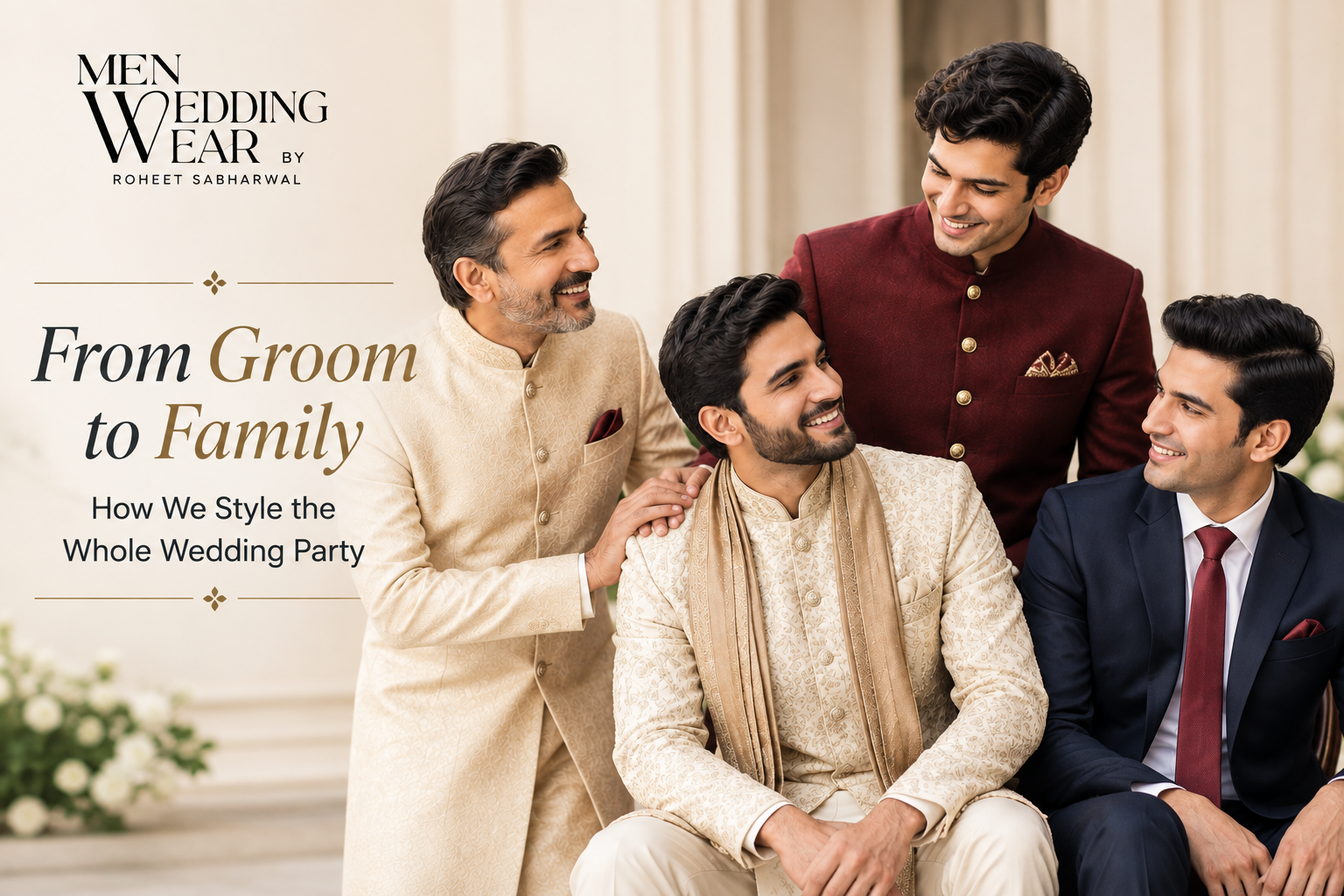
Suppose the groom wears a deep maroon sherwani; then the father might get a subtle tone from the same color family, maybe a muted gold or beige with maroon accents in the pocket square or stole. And the brother’s outfit often takes a slightly more relaxed approach, but is still connected through fabric or colour, with a fit and styling that suits a younger, more active role in the wedding festivities.
We believe both age and role matter here too. An outfit for the father typically leans more traditional, while a brother might get something with a touch more personality, a patterned jacket or a distinct bandhgala style.
Step 4: Planning Across Every Wedding Event
Weddings have evolved massively. Today, they rarely mean a single outfit for a single day. Each event- Mehndi, Haldi, the wedding ceremony, and the reception- has a different tone. Dressing the same way for all four rarely works.
Learning About the Event the Outfit Has to Be For
- When it is for Mehndi and Haldi, it is more about enjoyment, usually daytime, and often outdoors. Therefore, we lean toward lighter fabrics, brighter colors, and more comfortable, breathable cuts, maximizing comfort. Think kurtas in mustard, coral, or turquoise. Coordination across the family still matters here, but it’s looser, more about a shared color story than matching cuts.
- The wedding day is where more structured and formal looks call for. Sherwanis, bandhgalas, and tailored suits all come in here with the most careful color coordination between the groom, father, and brother. After all, this is the day most photos will actually be framed and kept.
- The tone shifts again for the reception. We usually lean more towards contemporary. Suits, tuxedos, or Indo-western outfits all tend to replace traditional wear here. This gives the family a chance to dress sharper and more modern for an evening event.
Planning for all four events together, rather than one at a time, is what keeps the family looking cohesive across the entire wedding, not just in a single photo.
Step 5: Personalization and Custom Tailoring
Coordination is only one part of what makes an outfit feel special. The other part is making it feel like it belongs to the person wearing it. It is about personalization and customization.
Custom Tailoring
Custom tailoring is where it really shows. Every outfit is fitted individually, not adjusted from a standard size. We believe a fit alone changes how formal or sharp an outfit looks in person and in photos.
Small Detailing
Small details like monogrammed initials on a cuff or pocket, a family crest subtly worked into a stole, or a fabric texture chosen specifically, all go a long way.
Complementing Accessories
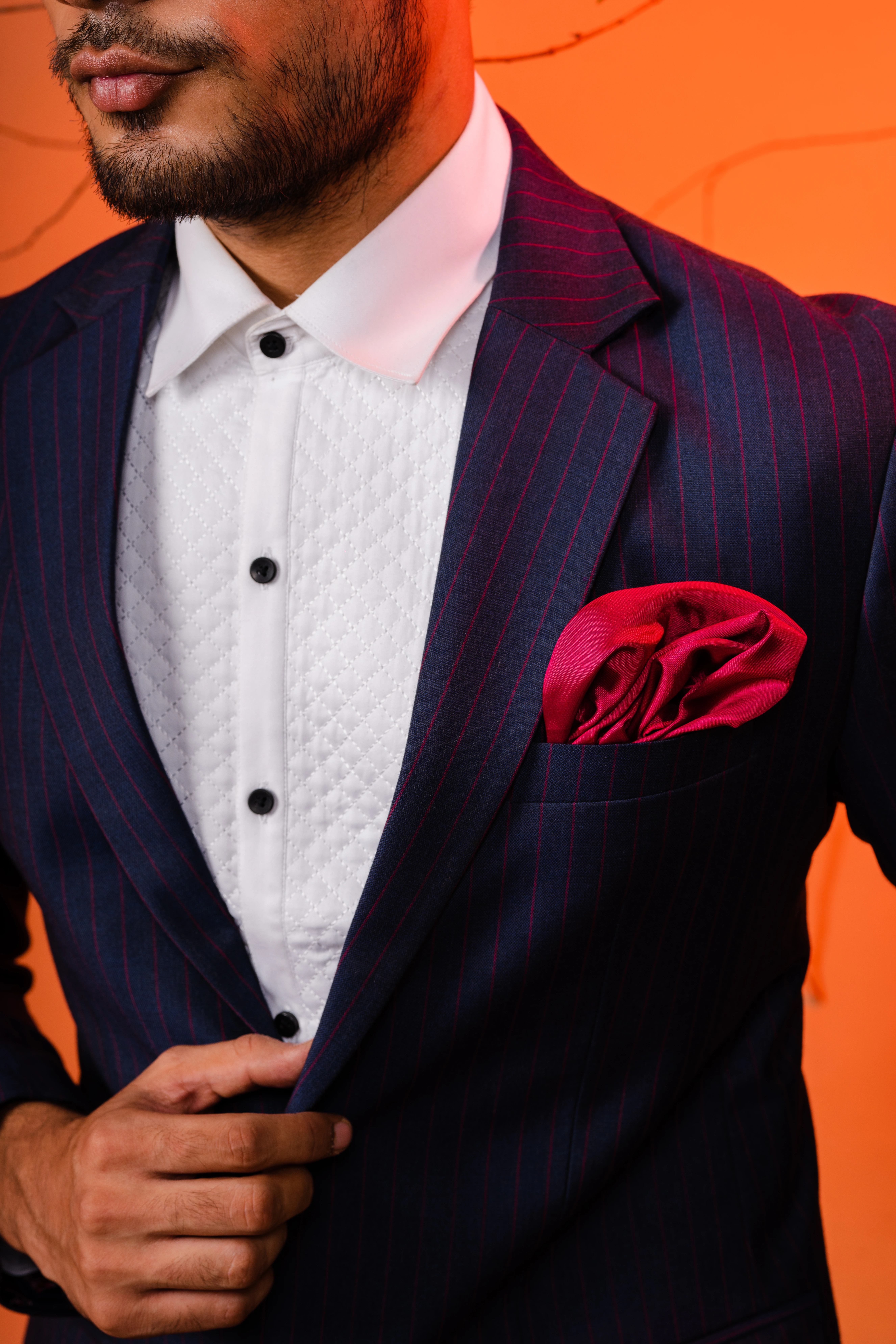
Then come the accessories. Matching pocket squares in a shared color family, coordinated stoles for the wedding day, or brooches and buttons that resemble the detail from the groom’s outfit all help tie the family’s overall look together.
Step 6: Final Fittings and Delivery
You don’t just come and take the outfits. Before anything gets finalized, every family member comes in for a final fitting. We make sure fit, length, and overall comfort are up to mark, not just close. This is also the point where last adjustments are made, like a sleeve taken in slightly or a hemline corrected.
Moreover, everything is scheduled to be ready well ahead of the wedding date, leaving room for any small changes without the last-minute rush. By the time the wedding week arrives, every outfit for every event is already sorted, fitted, and ready to wear.
Conclusion
Dressing a family for a wedding shouldn’t feel like several unrelated shopping trips. At Men Wedding Wear, our process is built to give families a cohesive, personalized look across every event. We start with the groom and extend naturally to the father and brother, without anyone feeling like an afterthought.
If your family has a wedding coming up and you’d rather plan it as one connected look instead of piecing it together separately, we would be glad to help you get started.
Contact us now!