+ 919810024178
 + 14168320727

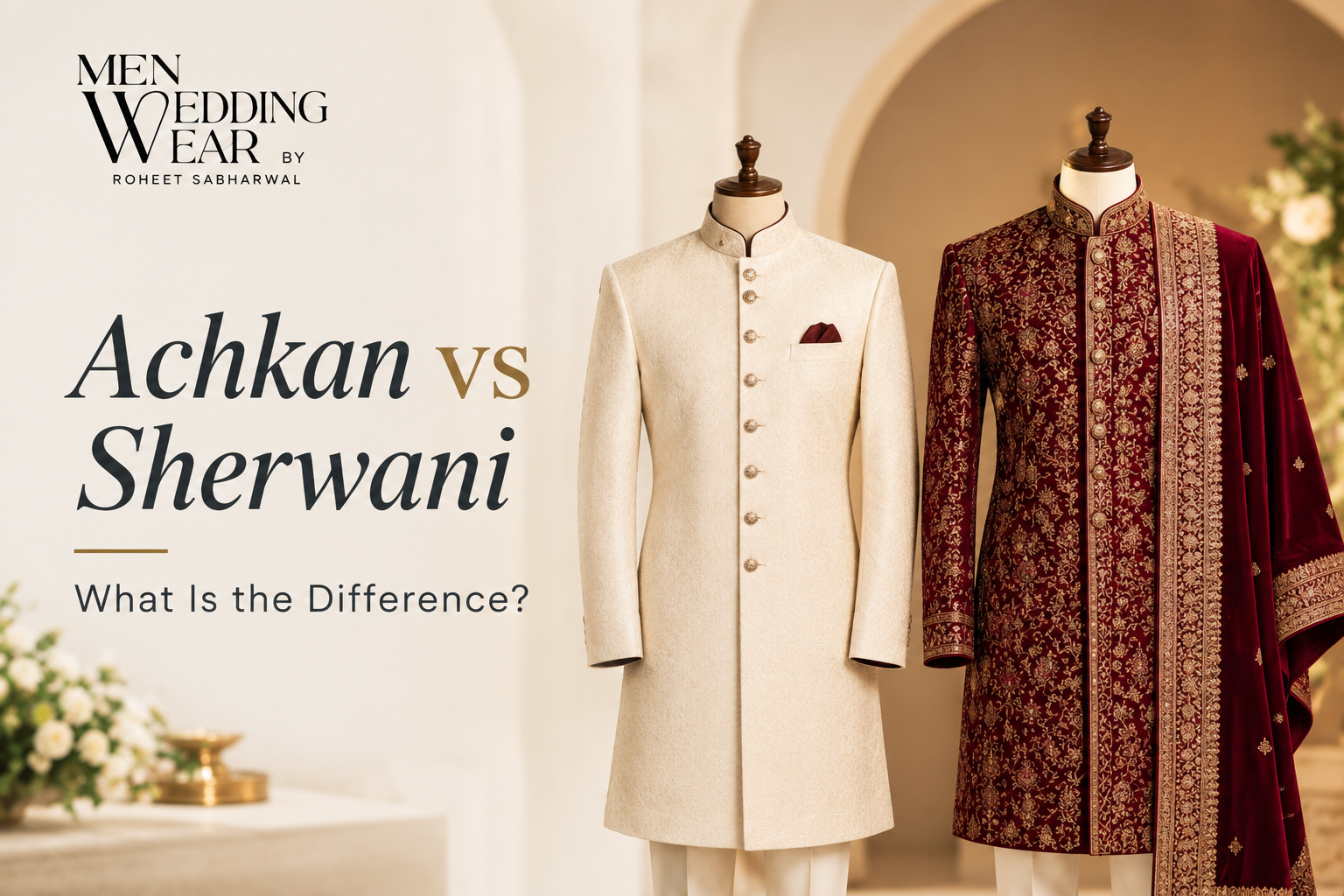
Achkan or sherwani? This is that one similar question that comes up in every wedding season. Yet, many people are unaware of how they differ. Both are staples of Indian formal wear, both show up heavily at weddings, and honestly, most people use the two names interchangeably without knowing they are not the same garment. And this mix-up is what is constantly seen in searches, in tailor shops, even among people shopping for their own wedding outfit.
This blog breaks down the real difference between an achkan and a sherwani, so you don’t get confused when buying either of them. We will cover the cut, the length, how each one fits, and where they are typically worn.
Without any further ado, let’s dive in.
What Is an Achkan?
An achkan is a long coat-like garment. It falls somewhere between the knee and mid-calf, fitted close to the body through the chest and waist. It usually has a stand-up collar, buttons down the front, and a structured silhouette, giving a sharp and formal look. Men prefer wearing it over a kurta or shirt, and pairing it with churidar or straight-fit trousers.
Its roots belong to royal and Mughal-era clothing. They were originally worn by nobility and officials as formal court attire. Over the passing decades, it moved from royal wardrobes into everyday formal wear for a variety of cultural occasions. What sets the achkan sherwani apart visually is its simple construction compared to heavier formal coats. It involves less embellishment, a cleaner line, and a fit that stays closer to the body throughout.
What Is a Sherwani?
A sherwani, on the other hand, is a longer, more heavily structured coat. It typically falls below the knee, closer to mid-thigh or even ankle-length in some styles. It is worn open or with a few buttons closed near the top. It is layered over a kurta and paired with churidar or a fitted pajama. If you compare an achkan and a sherwani, then a sherwani carries a heavier, more formal presence.
Sherwanis are closely associated with grand occasions, like weddings. Even a sherwani for the groom has become the default choice. It carries more detailing, such as embroidery, brocade fabric, contrast linings, and sometimes a stole or dupatta draped over one shoulder. All of these details are what make the sherwani feel more ceremonial. To put it simply, a piece of sherwani is built for standing out rather than blending into a formal setting.
Achkan vs Sherwani: Key Differences
Here are the key differences between achkan and sherwani:
| Feature | Achkan | Sherwani |
| Length | Knee to mid-calf | Below knee, often ankle-length |
| Fit | Close to the body | Looser, more structured drape |
| Detailing | Minimal embellishment | Heavy embroidery, brocade, contrast work |
| Layering | Worn closed, fewer accessories | Often paired with a stole or dupatta |
| Occasion | Formal wear, festivals, semi-formal events | Weddings, especially groom wear |
| Overall look | Sharp, understated | Ceremonial, statement-making |
Achkan Sherwani for the Groom
For grooms-to-be, the styling choices around achkan and sherwani get a bit more specific.
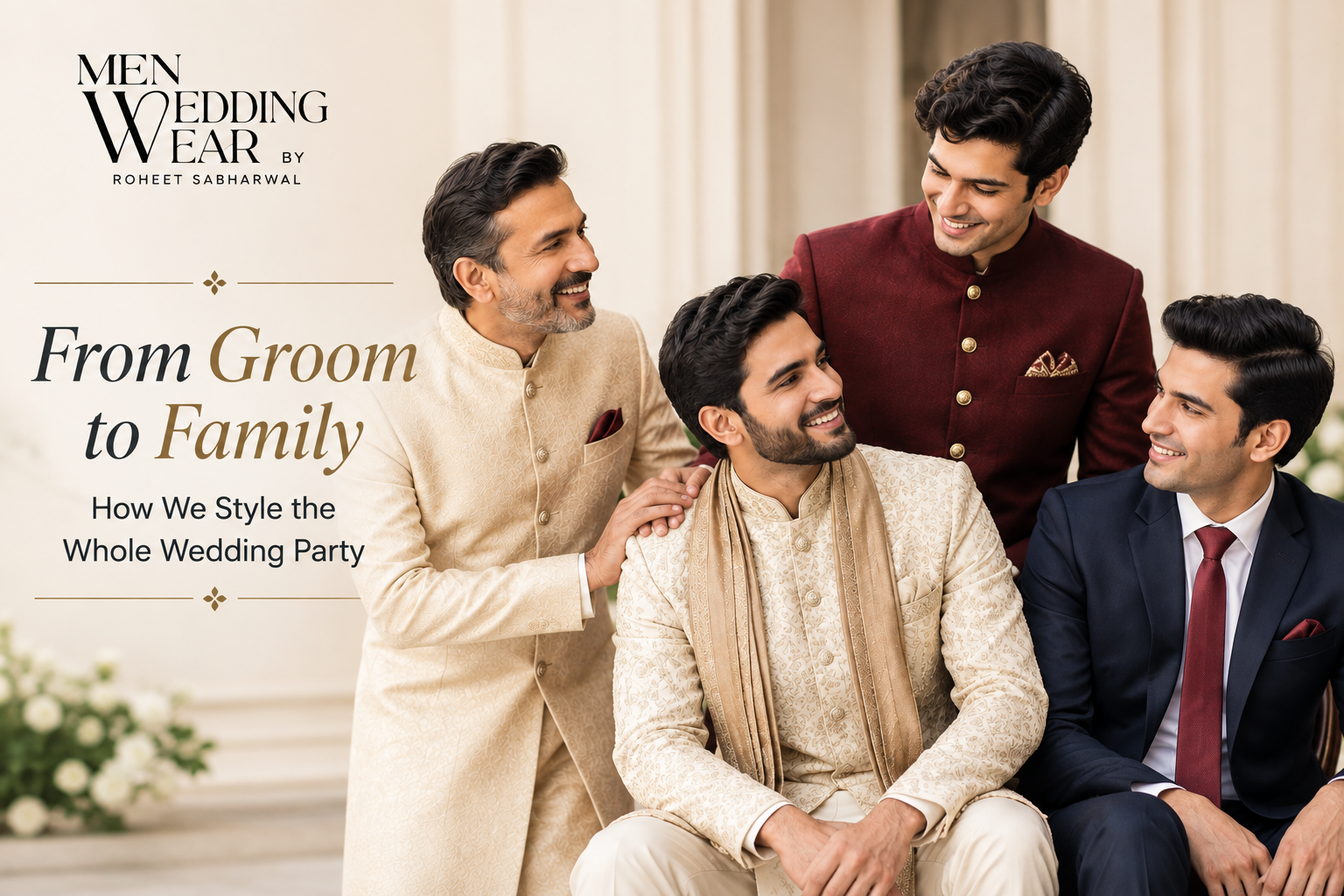
Achkan sherwani for groom takes a different approach than everyday formal wear. It often leans toward richer fabrics and heavier detailing, as this is typically the most photographed outfit of the day. Most commonly, grooms prefer going with a sherwani as the base. Then, to add more depth to their outfit, they layer in a contrast stole, a statement collar pin, or a heavier dupatta.
At the same time, some grooms prefer the achkan-style sherwani. At our store, we have seen this choice coming from grooms having daytime ceremonies or smaller, more intimate weddings. In these cases, the achkan sherwani is often paired with a simpler churidar and minimal jewelry. This lets the cut of the garment do the work without adding any additional embellishment.
Then comes the fabric choice. Silk, velvet, and brocade are common for sherwanis meant for the main wedding event, while lighter fabrics like cotton-silk blends work well for an achkan worn at a sangeet or reception.
Which One Should You Choose? Achkan or Sherwani
Making a choice between an achkan and a sherwani usually comes down to the event, the look you are going for, and how much you want the outfit to stand out.
An achkan is better if you want a sharp, tailored look without looking heavy. It works well for daytime events, smaller ceremonies, or anyone who prefers a cleaner silhouette over an elaborate one. It is also a practical choice for guests or family members attending a wedding.
A sherwani is better if the outfit needs to carry more presence. It is considered especially for the main wedding ceremony. Its heavier detailing and longer silhouette make it the go-to choice for grooms. The best part? It photographs well under the kind of lighting and staging most weddings involve.
Then comes choosing based on body type and comfort. The achkan’s closer fit suits those who prefer a more fitted look. On the other hand, the sherwani’s looser drape works well for those who want more room to move.
Conclusion
Understanding the difference between achkan and sherwani comes down to length, fit, and how much detailing each piece carries. The achkan-style sherwani has become a must-go choice for grooms having smaller ceremonies or daytime events. It offers a sharper, more tailored look. In contrast, the sherwani brings a heavier, more ceremonial presence, making it perfect for big events like weddings. If you ask which is better, then neither is objectively better. It depends on the event, the look you are going for, and how the outfit needs to fit into the day. Once that is clear, picking between the two becomes a lot easier.
Frequently Asked Question
1.Is an achkan the same as a sherwani?
No. They are different garments. An achkan is shorter and more fitted, while a sherwani is longer with a looser drape and heavier detailing.
2.Can an achkan be worn for a wedding?
Yes. It is often worn by grooms for daytime functions or by guests and family members across various wedding events.
3.Which is more expensive, achkan or sherwani?
Sherwanis typically cost more due to heavier fabric, embroidery, and detailing. Achkans, being simpler in construction, are usually more budget-friendly.
4.Can achkan and sherwani be customized with color and fabric?
Yes. Both can be tailored in different colors, fabrics, and finishes, including black, cream, maroon, and pastel shades, depending on the occasion.
5.Do achkan and sherwani require different accessories?
Sherwanis are often paired with a stole, brooch, or dupatta for added detail, while achkans are typically styled with minimal accessories to keep the look clean.