+ 919810024178
 + 14168320727
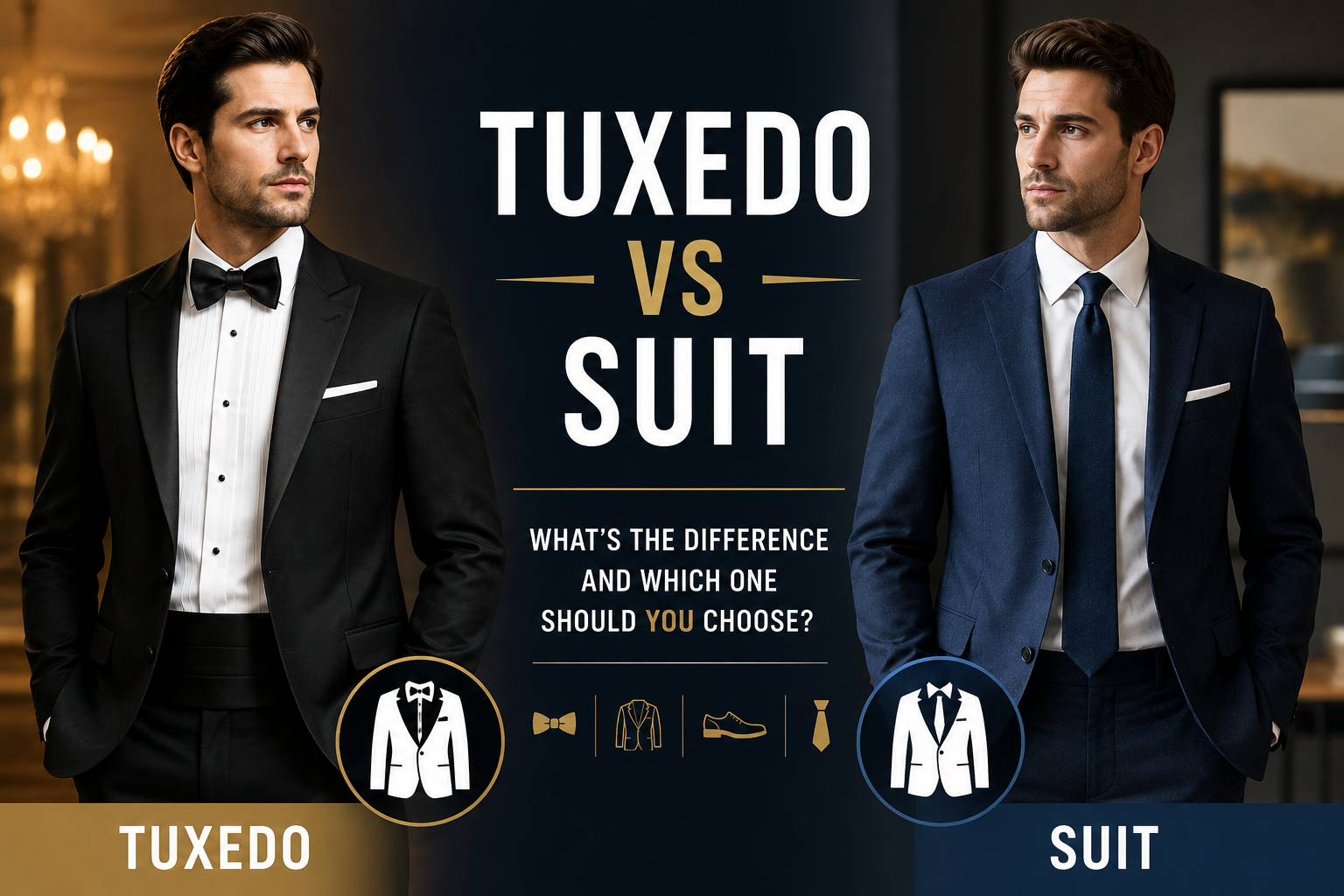
You got an invitation, and it says “black tie.” Now you’re standing in front of your closet, wondering what that actually means.
A tuxedo and a suit can look similar at first glance. Same basic shape, same two pieces. But they’re not the same thing, and wearing the wrong one is a real problem. Showing up in a suit to a black-tie event will make you look underdressed. At the same time, wearing a tuxedo is too formal for a casual event, and you will look overdressed.
The key is to understand the tuxedo vs suit difference.
This blog discusses everything you need to know about tuxedo vs suit, so you know exactly which one to wear and when.
What Is a Suit?
A suit is a matching jacket and trouser set, usually made from the same fabric.
It is one of the most common outfits considered formal or business clothing. And for many good reasons, it works almost anywhere.
You can wear a suit to work, a wedding, a funeral, or a semi-formal dinner. It is that flexible. And the best part? You can change the shirt, the tie, or even the shoes to change the look.
A navy suit with a plain white shirt, for example, looks sharp for an office meeting. But the same suit with a different tie can work for a night dinner.
They come in more variety than most people expect. You can have it in different colours, fabrics, patterns, and fits, and choose whatever you like. Its variety is exactly why a suit is the safer and more versatile choice for most events.
What Is a Tuxedo?
A tuxedo, on the other hand, is a formal jacket and trouser set. It is built for one specific purpose: black-tie events, such as weddings, galas, or formal evening dinners.
What truly makes a tuxedo different is the detailing. The lapels are covered in satin or silk, which gives them a shine that regular suits don’t have. In some cases, even a satin stripe running down the side of the trousers is also there in tuxedos.
If you look into tuxedo vs suit, then a tuxedo isn’t something you mix and match the way you can do with a suit. It has its own set of rules of wearing, like a bow tie instead of a necktie, and often a cummerbund or waistcoat to cover the waistband.
Overall, it is less about personal styling and more about following an already set formula that has stayed almost the same for generations.
Tuxedo vs Suit — Key Differences
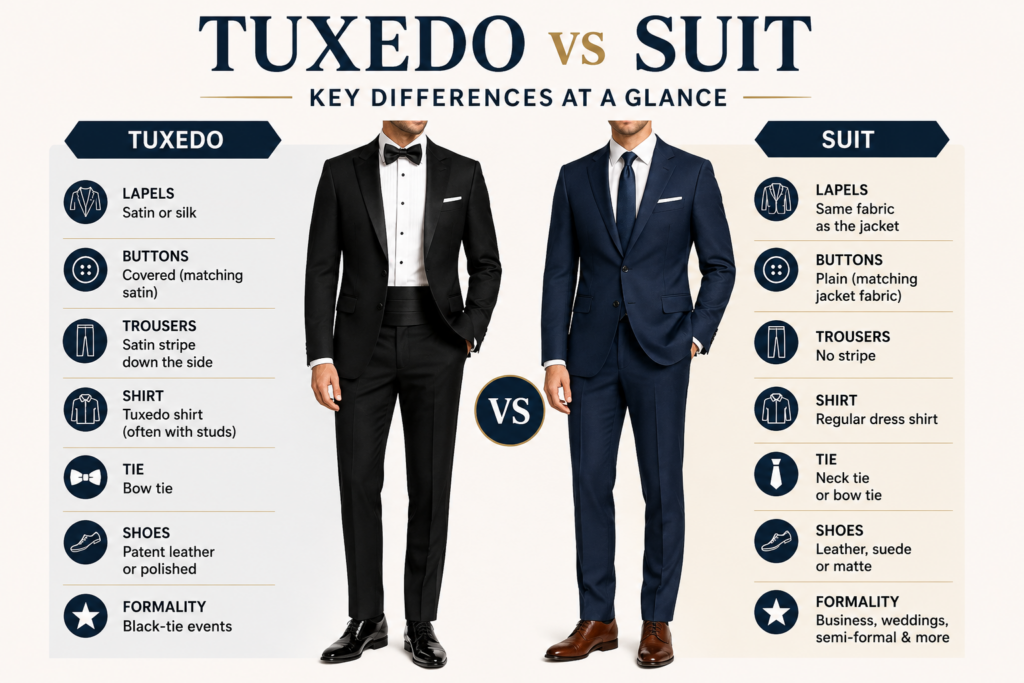
Let’s discuss the key tuxedo vs suit difference below:
- Lapels: Tuxedo lapels are satin or silk. At the same time, suit lapels are made from the same fabric as the rest of the jacket.
- Buttons: Tuxedo buttons usually match the satin detailing. Suit buttons are plain, matching the jacket fabric.
- Trousers: Tuxedo trousers often have a satin stripe down the side. Suit trousers have no stripe.
- Shirt: A tuxedo is worn with a special tuxedo shirt, sometimes with studs instead of buttons. A suit works with a regular dress shirt.
- Tie: A tuxedo is paired with a bow tie. A suit works with either a necktie or a bow tie. Flexibility is more here.
- Shoes: Tuxedos call for polished or patent leather shoes. With suits, leather, suede, even matte finishes can work.
- Formality: A tuxedo is strictly for black-tie events. A suit works for almost everything else: business, weddings, semi-formal, even casual.
Where the Blazer Fits In?
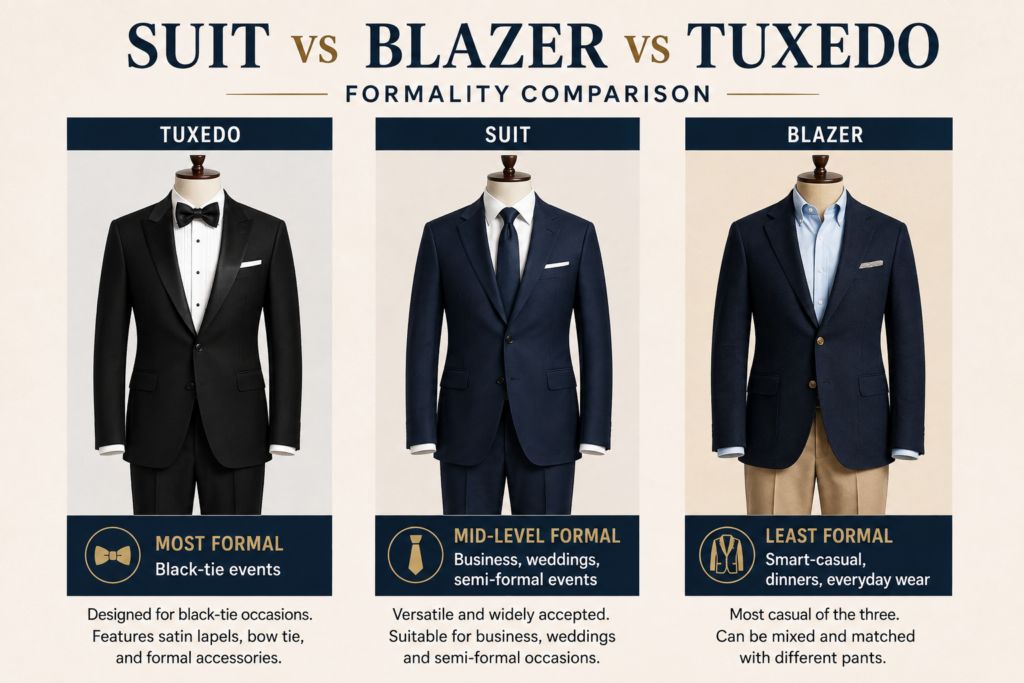
If you are confused between tuxedo vs suit vs blazer too, then let’s clear it up.
First, understand that a blazer is a jacket on its own. It is not part of a matching set as it doesn’t come with matching trousers. This is exactly what makes it different from both a suit and a tuxedo. The purpose of a blazer is completely different. You can pair a blazer with trousers or jeans in a different colour or fabric. It is all about personal dressing and gives it a more relaxed, put-together look rather than a fully formal one.
Here’s the simple way to rank all three by formality:
- Tuxedo: Most formal. Strictly black-tie events.
- Suit: Middle ground. Business, weddings, semi-formal events.
- Blazer: Least formal of the three. Smart-casual settings, dinners, everyday wear.
So, when you must wear suit vs blazer vs tuxedo, the answer really comes down to how formal the event is. Whenever there is a doubt, or you feel dicey in something, consider a suit almost always the safer choice. It sits right in the middle and rarely looks wrong.
Which One Should You Choose? (By Occasion)
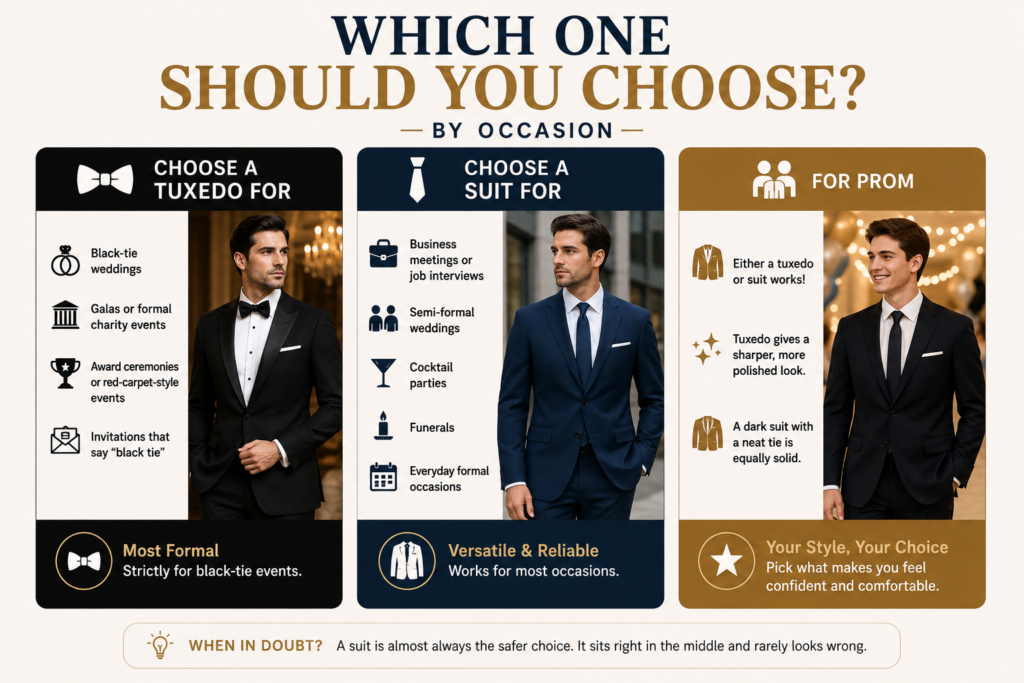
The easiest way to decide is to match your outfit to the event.
Choose a tuxedo for:
- Black-tie weddings
- Galas or formal charity events
- Award ceremonies or red-carpet-style events
- Any invitation that specifically says “black tie”
Choose a suit for:
- Business meetings or job interviews
- Semi-formal weddings
- Cocktail parties
- Funerals
- Everyday formal occasions
What about prom?
This is where the tuxedo vs suit for prom question comes up a lot. Either one works, honestly.
- A tuxedo gives a sharper, more polished look and photographs well for the occasion.
- A dark suit with a neat tie is an equally solid choice. And again, it’s easier to wear, since a suit isn’t limited to one type of event.
A Quick Note on the Dinner Jacket
Dinner jacket is another term that confuses people.
Dinner jacket vs tuxedo vs suit:
There is not really a difference between a dinner jacket and a tuxedo. It’s the same garment. Dinner jacket is the British term used for tuxedo in the US. It is made with the same satin lapels, the same formal rules, and the same black-tie occasions.
So, there is no need to be confused; it’s a tuxedo by another name.
Conclusion
The difference between a tuxedo and a suit comes down to formality. A tuxedo is built for one purpose: black-tie events, with satin details and strict styling rules. In contrast, a suit is far more flexible, working for everything from the office to weddings to casual dinners.
When you’re not sure which one to wear, a suit is almost always the safer bet. Save the tuxedo for when the invitation specifically calls for it, and you’ll never have to worry about being under- or overdressed again.